


Just How Different Is The Odyssey from Homer’s Epic? Here Are 5 Plot Points That People Are Calling Out
Just How Different Is The Odyssey from Homer’s Epic? Here Are 5 Plot Points That People Are Calling Out

Ally ChildressSat, August 1, 2026 at 8:00 AM UTC
0
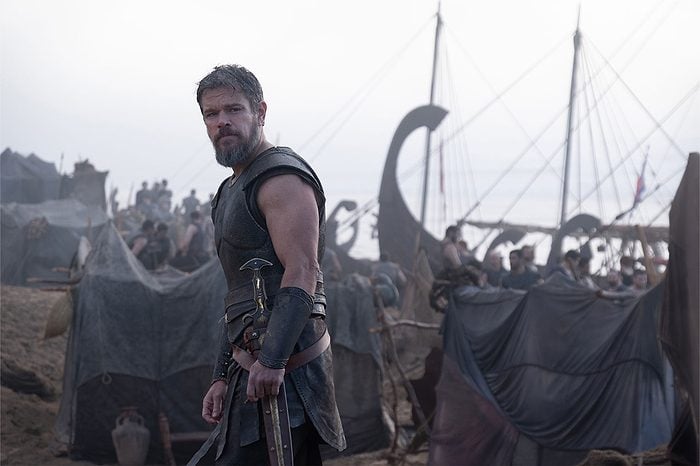
Have you ever walked out of a movie that you (mostly) loved, or read a book that really moved you, only to hear that someone else you respect absolutely hated it? It’s a weird feeling, and it’s kind of what’s happening with The Odyssey right now. The internet is going wild over a scathing review of Christopher Nolan’s epic movie by none other than Emily Wilson, whose translation of the 3,000-year-old poem Nolan says was an inspiration.
The translator did have some good things to say about the film, and clearly the public is plowing ahead to the theater regardless. The Odyssey is the biggest hit of the summer, reviews are generally fantastic, and it’s grossed over $700 million globally in less than two weeks. But it brings up an interesting discussion about movies based on beloved works of art. Homer’s 3,000-year-old poem has inspired countless movies, TV shows and literary analyses, and every single one of them will speak to people differently.
Have you seen it? What did you think? If you were already familiar with the poem, do the changes and artistic license bother you? Ahead, I’m taking you through five differences between the epic poem and the epic movie that are being debated at proverbial water coolers everywhere. Read on to see what people are saying.
Get Reader’s Digest’s Read Up newsletter for more entertainment, fun facts, humor, cleaning, travel and tech all week long.
Gods and goddesses are sidelined in the movie
In Homer’s epic, powerful and sometimes vengeful deities are front and center, casting judgment, deciding fates and punishing humans who dare to defy them. (Think of all those old Hollywood movies that portrayed Greek gods as toga-wearing judges sitting on Mount Olympus.) Nolan takes a different approach, telling a decidedly human-centered tale.
We do have Athena, played by Zendaya, whom Odysseus turns to throughout the film. But that’s basically it. Other gods, from Poseidon to Zeus, manifest themselves as the sea and the storms and other natural phenomena that plague Odysseus and his men—not to mention everyone else in the film—instead of as physical beings. And that’s by design.
“For me, what was important was that we view the gods the way that people at the time might have viewed them,” Nolan told Time. “So they’re seeing evidence of the gods in nature. They’re seeking and finding gods and the influence of gods in the people around them.”
The Trojan Horse is barely mentioned in Homer’s original tale
The story of the Trojan Horse is one of the most famous in all of Greek mythology, and it plays a huge role in the movie. Right at the outset, we see a giant wooden horse buried in the sand outside the castle walls of Troy, which the Greek army has been fruitlessly trying to invade for nearly 10 years.
As the movie continues its nonlinear narrative, we eventually get the entire story of the world’s most famous deception: Odysseus’s men hide inside the horse and trick the Trojans into dragging them into Troy, where they (surprise!) pop out and destroy the city. But the horse gets only three minor mentions in Homer’s poem. And it’s not in The Iliad, the other major Homeric poem from this time period, at all. It’s actually in Virgil’s Aeneid, which was written hundreds of years later.
Historians have long debated whether the Trojan War even happened, at least as described by these three epic poems. Current scholarship comes down on the side of yes, some kind of Trojan War (or several) did occur in the Late Bronze Age. And certainly the ancient Greeks believed in the story. So is the Trojan Horse faithful to the poem? No, but without Odysseus’s deceit, which sets the stage for his struggle to return home, we wouldn’t have much of a movie at all.
Nolan’s Cyclops didn’t get to hear Odysseus’s joke
Who knew Odysseus had a sense of humor? He’s pretty dour in the movie, which … of course he is. He’s responsible for the deaths of many of his men, and he’s been away from his home and family for 20 years. (He’s also plenty adrift metaphorically as well.)
But Homer’s Odysseus is a clever one, and there’s one very famous pun that didn’t make the final cut of the film. It happens when Odysseus and his men have a terrifying encounter with the Cyclops, a one-eyed giant shepherd who traps the group in his lair.
In the poem, Odysseus tells the Cyclops his name is Nobody. I think you can see where this is going: When Odysseus eventually gouges the Cyclops’s eye with a red-hot stake that Odysseus had been heating up over the fire, the monster’s fellow Cyclopes run over and ask him who is attacking him.
“Nobody!” the Cyclops screams. And since they’re not the smartest bunch of monsters, they leave. Nolan said he just couldn’t make the 3,000-year-old pun work, so it ended up on the cutting-room floor.
Advertisement
Circe has completely different motivations
In just 10 minutes, Samantha Morton runs away with this film, and I’d bet my house she’ll be giving plenty of speeches this awards season. She plays Circe, a sorceress who turns Odysseus’s men into pigs when they land on her island home after escaping from the cannibalistic Laestrygonians (more on them coming up).
In the poem, Circe is a seductress who toys with the men and their leader. Lonely and isolated, she sings and weaves at her loom in a parallel to Penelope, Odysseus’s wife, before drugging the whole lot. But when Odysseus doesn’t succumb to her potion (he had taken a protective antidote), she falls in love with him, and they all end up staying with her for a year. She then helps the men continue on their journey.
In the movie, Morton plays the role as more world-weary and self-preserving. And rather frightening, to be honest. She’s on screen for mere minutes, and I spent several of them with my eyes covered. Over the millennia, Circe has been described as both a dangerous femme fatale and a modern symbol of female empowerment. In this movie, she’s definitely more of the latter.
The movie reimagines the cannibals and sirens
Those cannibals that Odysseus and his men are running from when they meet up with Circe? In the poem, they are literal giants called the Laestrygonians (or Laestrygones), who hurl boulders at Odysseus’s ships, destroying 11 of them before dragging the sailors ashore and eating them. Only Odysseus’s ship is spared. In Nolan’s retelling, the cannibals are more like large knights with armor, giving off a militaristic energy that isn’t present in Book 10 of The Odyssey, where they appear.
The sirens, similarly, take on a new form in the movie. In Greek mythology, sirens lure sailors to their peril with their beautiful voices—hence the phrase “siren’s song.” Though Homer’s poem doesn’t actually go into what form the sirens take when Odysseus and his men sail through their rocky home, historically they are depicted as being kind of a bird-woman hybrid (the woman part is on top, of course).
In Nolan’s telling, the sirens are barely visible on the rocky bluffs as Odysseus, lashed to the mast of his ship to resist temptation, and his men, who have wax in their ears to block out the sound, navigate the rocky shoals. Wilson derisively calls them seal-ladies, and over the years, they have been portrayed as more mermaid-like than birdlike. Whether they look like traditional artistic renderings or take a new form, the end result is the same: The men make it through.
So how much does all of this matter?
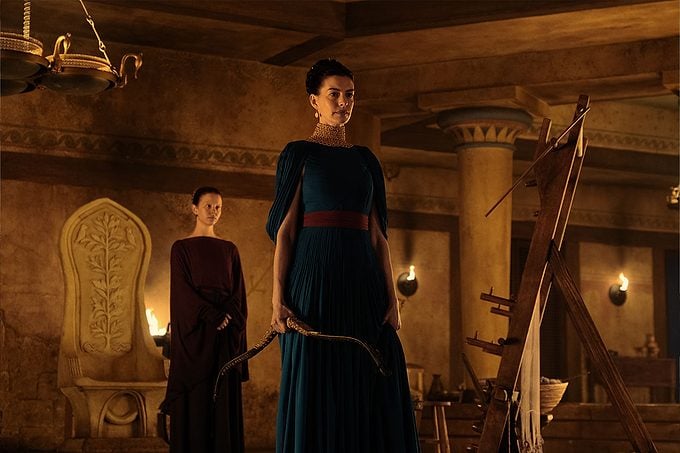
Honestly? Not much. Audiences love the film, and art is always subject to interpretation and critique. The overarching themes of homecoming and the ancient Greek concept of xenia, aka hospitality, which Nolan’s film calls Zeus’s Law, are present and compelling. It’s also a gorgeous film, shot entirely on IMAX, and with so many big-name stars, it’s a great way for people who don’t know much about Greek mythology to tiptoe into the genre.
And people are doing more than tiptoeing (remember that $700 million haul so far). Reviews are overwhelmingly favorable, with the film snagging a 94% fresh critics rating on Rotten Tomatoes. And some big names in the literary world are taking issue with Wilson’s panning of the script.
Joyce Carol Oates, the Pulitzer Prize–nominated author, has stepped up to defend Nolan’s interpretation. “One would expect a translator, of all people, beholden to a text, in service to a text, to be just a wee bit more thoughtful & respectful of others who are acting in good faith just as (she would claim) she is,” Oates wrote on X.
I can’t pretend to be as knowledgeable as any of these scholars, filmmakers and authors, but I did like the movie and the fact that it’s introducing this type of literature and history to a whole new audience. And in the end, isn’t that what it’s all about?
Sources: -
New Yorker: “Christopher Nolan’s ‘The Odyssey’ Leaves the Gods in the Outtakes”
History: “What Inspired the Cyclops, Sirens and Other ‘Odyssey’ Monsters?”
Time: “Christopher Nolan on Helen, Athena, and His New Ending for The Odyssey”
Hollywood Reporter: “Why Christopher Nolan Cut a 3,000-Year-Old Joke from ‘The Odyssey’”
NPR: “‘Odyssey’ translator Emily Wilson says Nolan shouldn’t have written the movie himself”
Vanity Fair: “A Horse of a Different Color: Christopher Nolan’s 10 Biggest Odyssey Updates”
Los Angeles Times: “8 ways that Christopher Nolan’s ‘Odyssey’ changes Homer’s epic”
Variety: “Samantha Morton on Her Electrifying Performance as Circe in Christopher Nolan’s ‘The Odyssey’: ‘It Felt Like a Rebirth’”
Decider: “Who Were the Giant Soldiers in ‘The Odyssey’? All About The Laestrygonians”
Rotten Tomatoes: “The Odyssey”
Los Angeles Times: “Joyce Carol Oates goes to battle for ‘Odyssey,’ takes aim at translator Emily Wilson’s viral review”
The Best Disaster Movies of All Time
Watch These Movies Based on True Stories
The Best Romance Movies of All Time
The post Just How Different Is The Odyssey from Homer’s Epic? Here Are 5 Plot Points That People Are Calling Out appeared first on Reader's Digest.
Source: “AOL Entertainment”
