


‘It’s wrong that I’m the Earl of Devon, not my big sister’
‘It’s wrong that I’m the Earl of Devon, not my big sister’

Anna TyzackMon, August 3, 2026 at 8:09 AM UTC
0
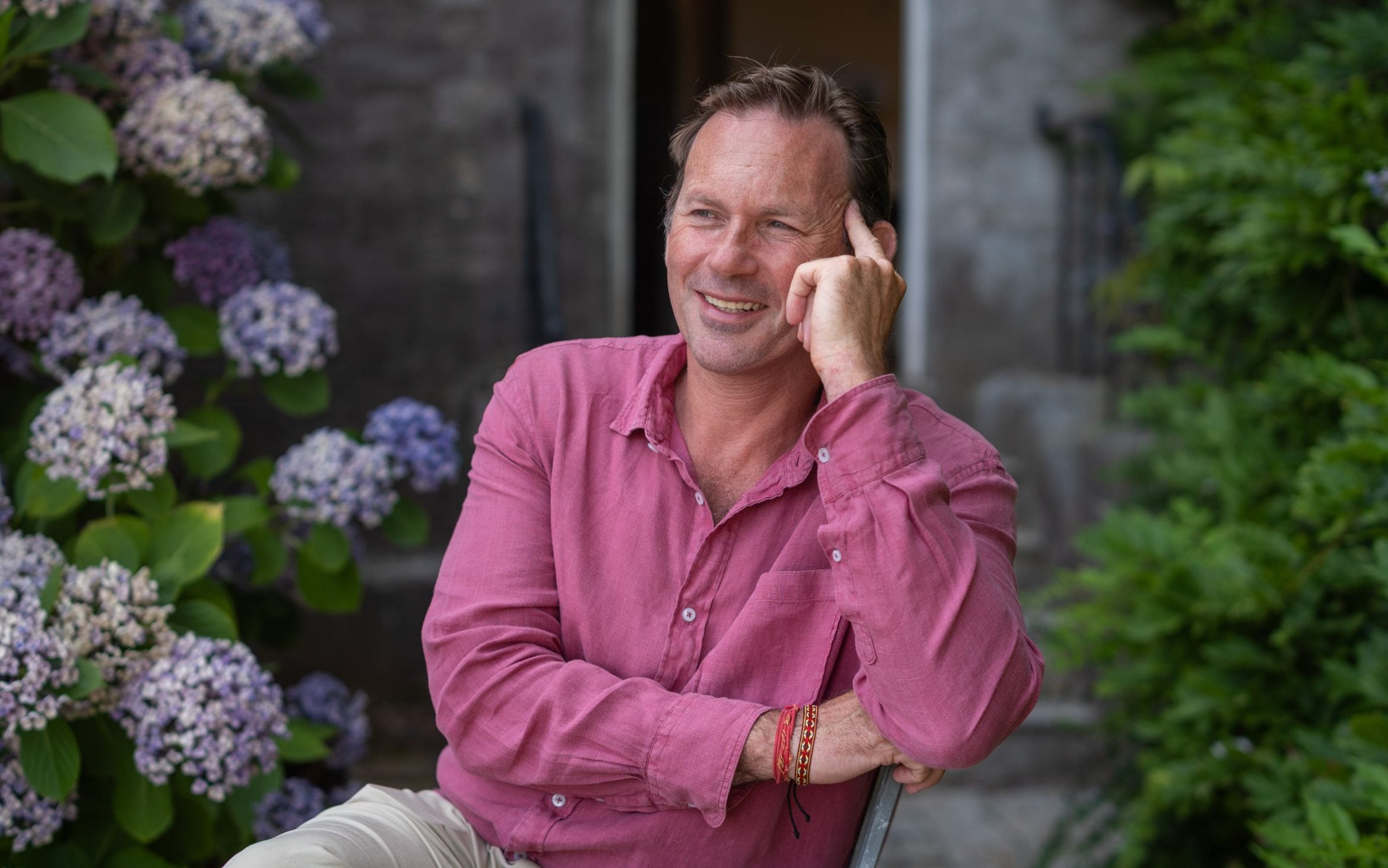
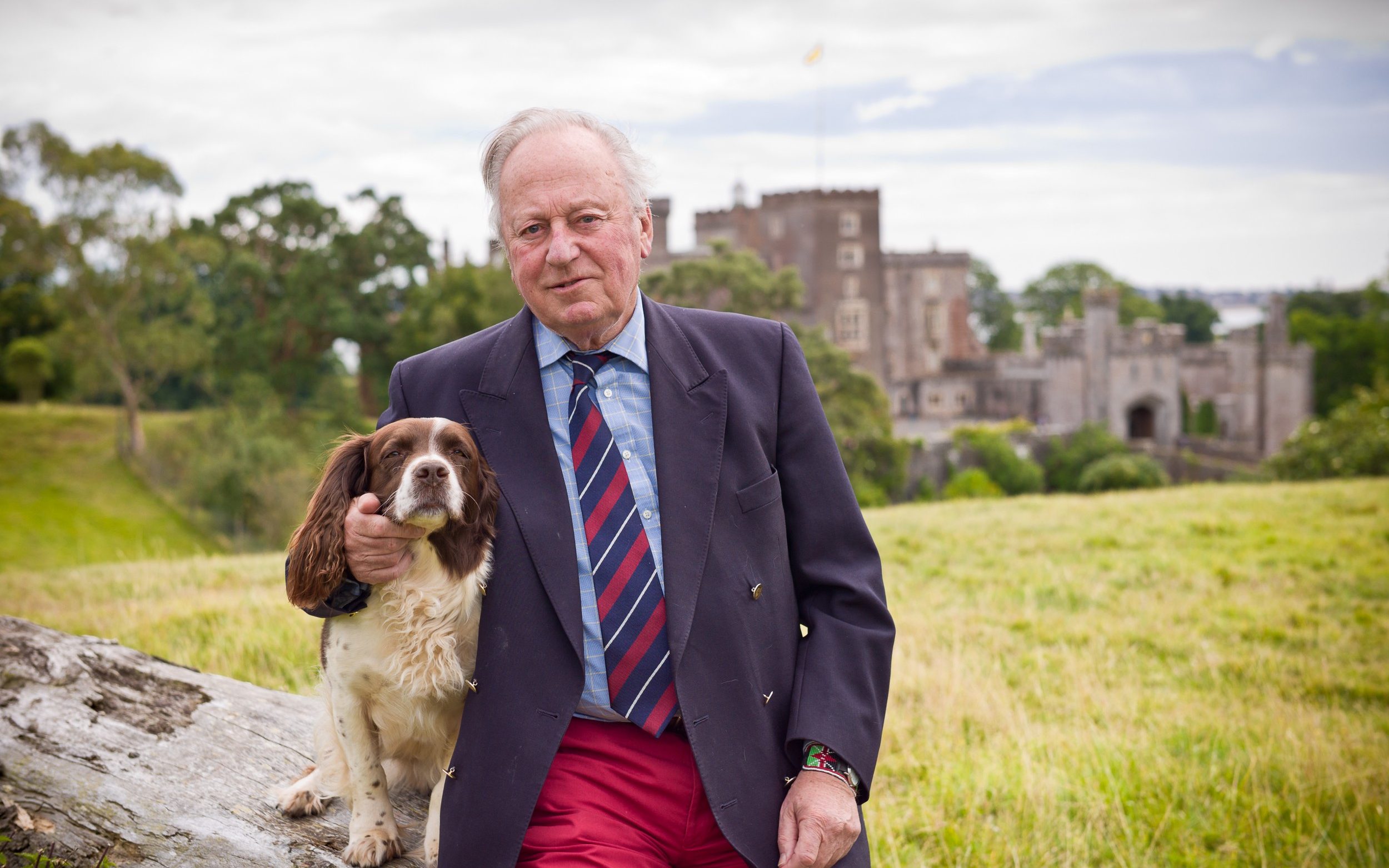
The 19th Earl of Devon, photographed for The Telegraph at his family seat, Powderham Castle in Devon - Jim Wileman
When the Prince of Wales announced the sale of a number of farms earlier this year, he would not have been aware that he was stirring up a 487-year-old grudge with the Earl of Devon. But Charles Courtenay, the 19th Earl, is still brooding over the events of 1539. The farms, which now belong to the Duchy of Cornwall, were in fact confiscated by Henry VIII from his ancestor, the first Marquess of Exeter.
“Rather than selling his stolen manors for value, thereby crystallising Henry VIII’s theft, the Prince of Wales might consider returning them to their rightful owner,” he says.
The Earl, an intellectual property lawyer whose family once owned vast swathes of Britain and the whole of the Isle of Wight, is down to his last castle: Powderham, a 14th-century fortified manor house with 3,500 acres on the Exe Estuary in Devon. He’s not seriously expecting any land back from Prince William, though. Instead, he’s using the case to question the wisdom of the House of Lords (Hereditary Peers) Act 2026, which in April saw the remaining 92 hereditary peers banished from the House of Lords – to “defend the indefensible”, as he puts it.
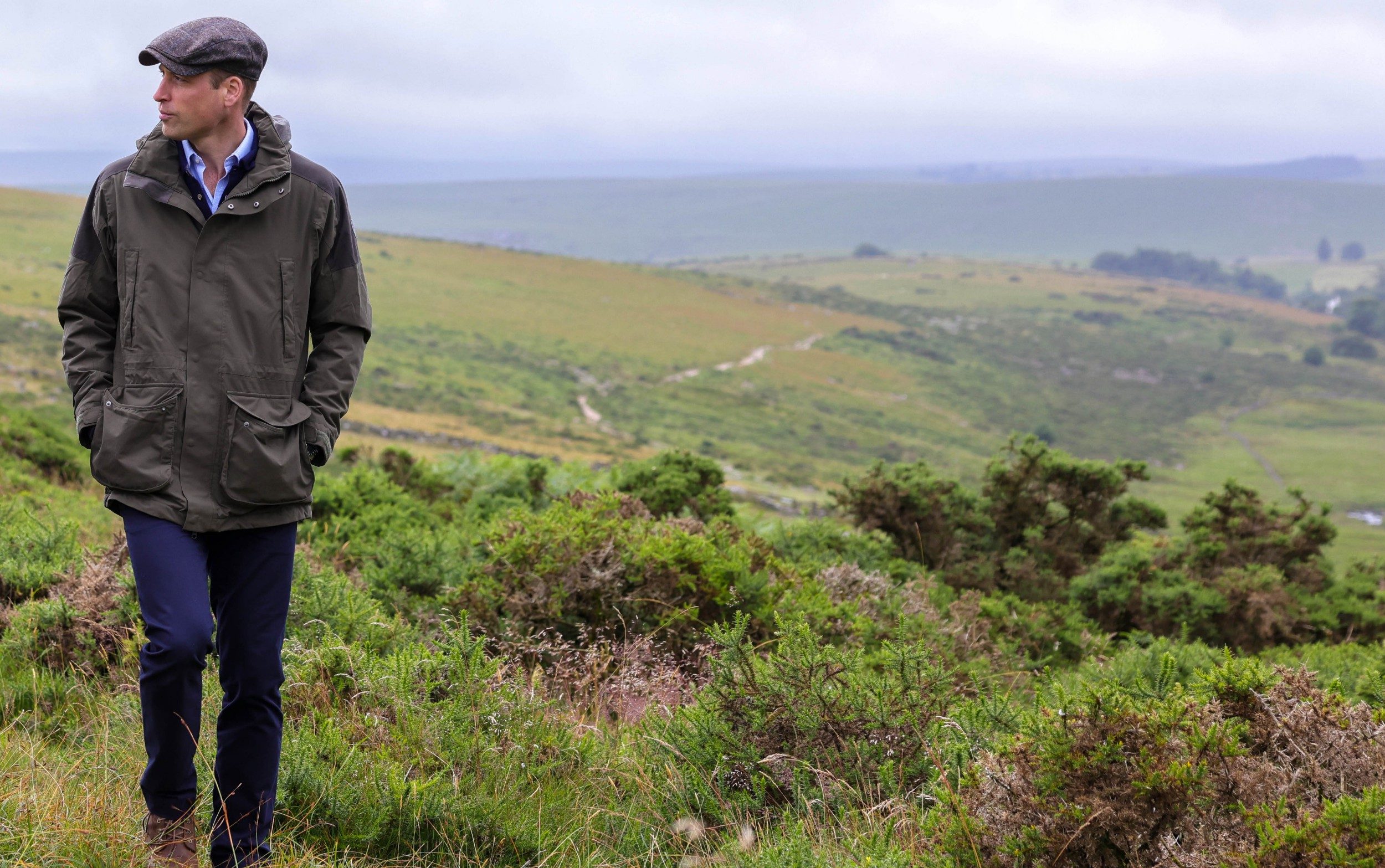
Prince William’s (pictured on Dartmoor) Duchy of Cornwall land sale reopened a centuries-old dispute with the Earl of Devon - Andrew Parsons / Kensington Palace
“Labour suggests that hereditaries are ‘indefensible’. That is ironic, given how consistently we have defended this island nation,” he continues. “We are here not for personal gain but due to an antiquated sense of duty, which is not only defensible but a key characteristic of our constitutional fabric. We rend that fabric at our peril: Britain will be poorer without it. A hereditary thread runs through our society, from our sovereign head of state to our basic freedom to inherit private property. Our national identity is inherited, particularly in the regions.”
Families like his were here long before the current Royal family, he says. “We know that the way our sovereign established itself was by a series of steps, some of which have been good and some of which were not so good. What is more legitimate – people like us, who were elected transparently and provide a collective cultural memory following centuries of public service, or those who might only be there because they performed an undisclosed favour for a former prime minister?”
It’s a baking July day and the Earl, dressed in a raspberry-coloured shirt he picked up second-hand on a trip to France with his children, is standing on the terrace of his castle in the shade of an enormous wisteria. Below us, the scorched deer park stretches out towards the estuary. As if put there to prove his point about collective memory, the gravestone of Timothy, the family tortoise, is propped against the pink castle wall beside him. He was picked up in the Crimea in 1852 and died at the castle in 2004.
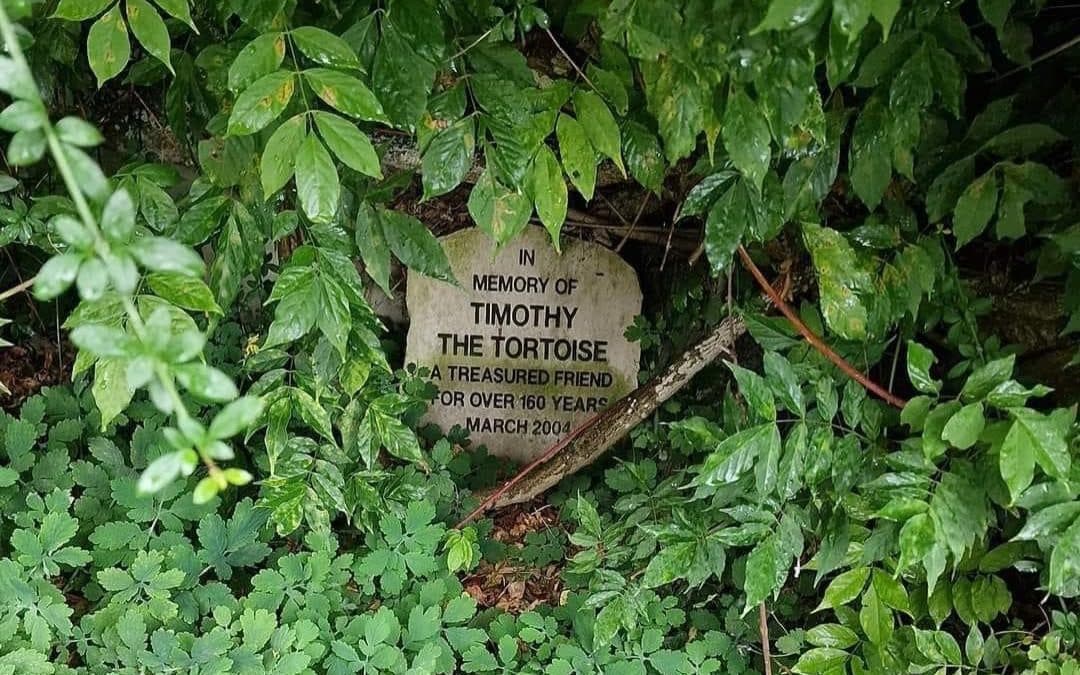
The grave of Timothy the tortoise, who lived at Powderham Castle for more than 150 years after arriving from the Crimea in 1852
“He was the oldest pet tortoise in the world,” the Earl says. “A young captain took him ashore at Southampton and gave him to a girl, my great-great-grandmother, who brought him to Powderham when she married my great-grandfather in the 1920s.”
The Earl, 50, is a commanding presence: 6ft 5in with a cauliflower ear from playing rugby in his youth. I suspect he would prefer to spend the next hour discussing history – the castle is filled with heirlooms, collections and secret doors – rather than airing his views on the House of Lords (Hereditary Peers) Act 2026. Yet, as one of the few peers who have been vocal about it, he has agreed to a rare interview. “I don’t understand why more hereditary peers didn’t speak out about the role they were fulfilling,” he says. “Why take up the seat if you don’t think you should be here? Don’t be apologetic. Own it.”
For eight years, the Earl was an active crossbench peer, serving on committees and speaking on subjects such as planning, heritage, rural affairs and constitutional issues. He voted around 190 times. “It meant personal sacrifice but I saw it as part of my duty as an Earl,” he says. “I was able to speak and act with the knowledge of a county my family has always lived in.”
He already knew, when he was voted in, that hereditaries were on borrowed time. More than 600, including his father, Hugh, were culled in 1999 as part of Tony Blair’s reforms, with 92 remaining on a temporary basis. But he put his name forward anyway and was voted in on the death of an existing noble. “I wanted to be there for the end; to engage on the topic [of hereditary peers in the Lords]. It was interesting to debate why we have earls and dukes and marquesses. And why they still sit in Parliament.”
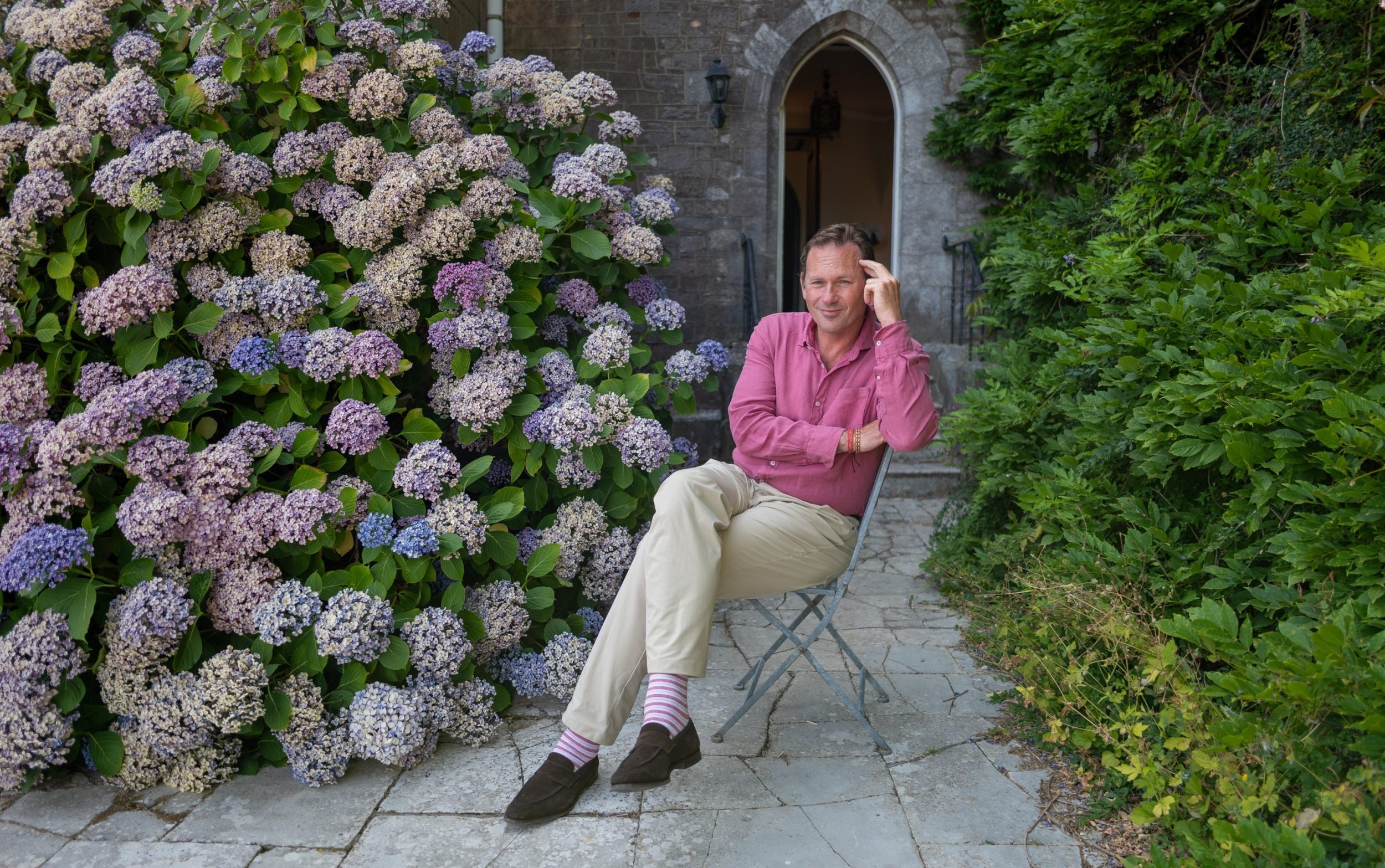
At 6ft 5in, the Earl of Devon cuts a commanding figure at Powderham Castle - Jim Wileman
While he ultimately lost the constitutional argument and his seat in the Lords, he believes he made a difference in other respects. “I did some work on the Environment and Agriculture Act and changed the law significantly on the novel concept of conservation covenants.”
Without hereditaries such as the Earl of Caithness and Viscount Massereene in the Lords, there will be less regional representation, he says. He also believes that “the Lords has become too politicised” thanks to appointments by successive prime ministers. “I pushed for a number of amendments around trying to increase the role of the House of Lords Appointments Commission, to try to fill the House with greater expertise, with people who are leaders within their field, and less political inclination.”
As a concession after the Act, hereditary peers were able to apply for a small number of life peerages. The Duke of Wellington clinched one but Courtenay did not put his hat in the ring.
“I’d like to rejoin the House of Lords but only on my own merit,” he says. “I wasn’t there because Charlie Courtenay happened to be good at anything. I was there because I was the Earl of Devon. By jockeying for a life peerage and then taking it, I’d be denying someone who possibly hadn’t gone to Eton, wasn’t male and middle-aged and aristocratic. I was a hereditary peer; I was there to do that job and that job alone. Everyone is criticising us, legitimately, for our lack of diversity, and my personal view is that we shouldn’t use our privilege to get ourselves a life peerage at the expense of someone with less opportunity and possibly more diversity.”
Hugh Courtenay, the 18th Earl of Devon, at Powderham Castle before his death in 2015, aged 73
The Earl has been wrestling with his privilege since he was a teenager. His early childhood was spent living in the converted stables at Powderham, moving into the castle in his teens when his father became the 18th Earl. “I saw it as a blessing and a curse,” he says. “I used to feel shame about living in a castle.” While Eton normalised things to an extent, as there were other pupils with titles, his closest friends were from hardworking professional backgrounds rather than landed ones. “I didn’t spend all my holidays going to other people’s estates and comparing notes,” he says.
His life was following a familiar track, though – Cambridge, followed by the Bar – until, in 2002, while on a London Scottish rugby tour in Las Vegas, he met the American actress AJ Langer, known for her roles in Baywatch and My So-Called Life, at the Hard Rock Hotel. He kept quiet about being a future Earl, and they kept in touch across the Atlantic, meeting in New York, before the Earl relocated to California with his law firm. They married in 2004 and, in 2015, on the death of the Earl’s father, aged 73, the couple moved permanently to Powderham with their two children, Lady Joscelyn, now 19, and Jack, Lord Courtenay, 16.
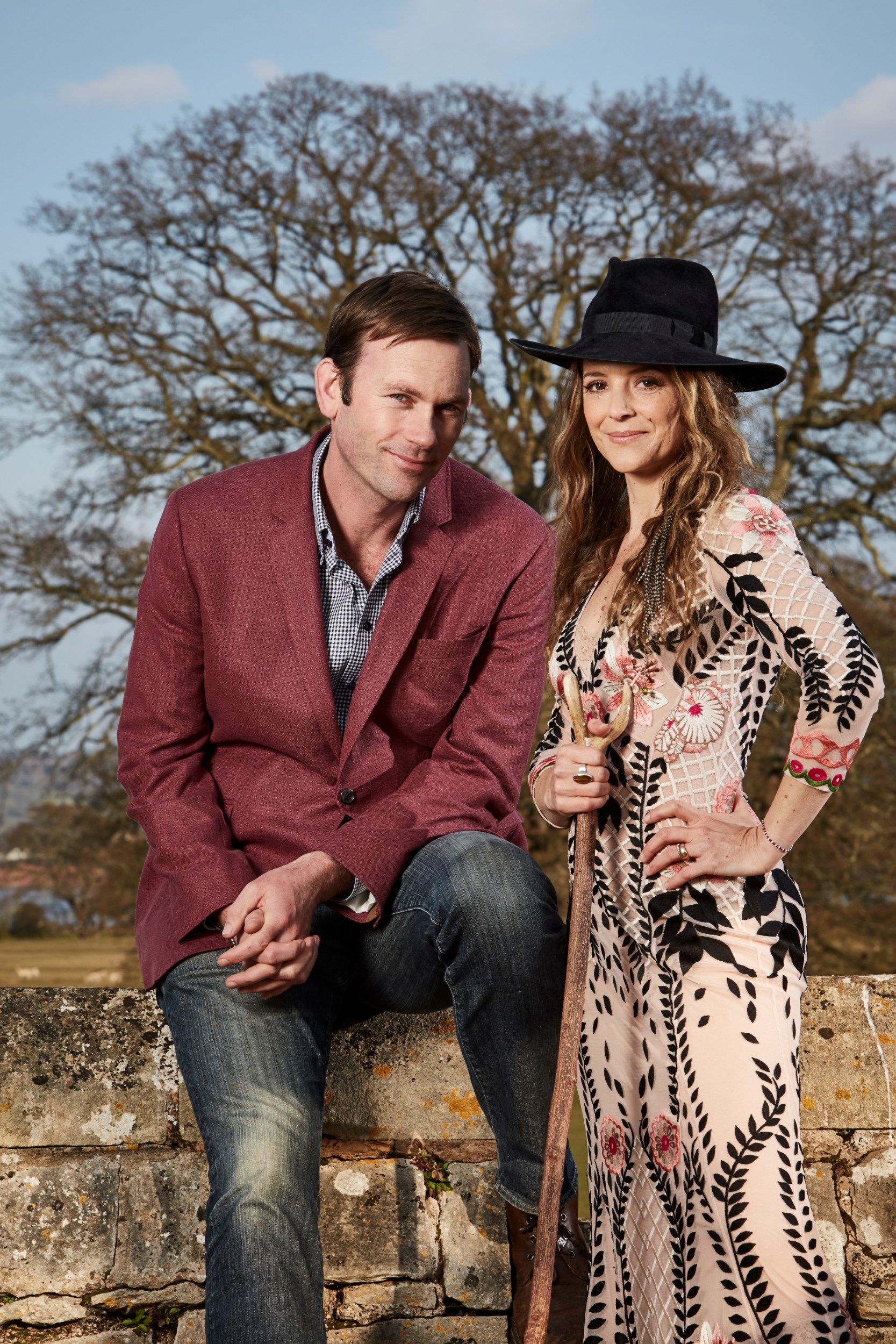
The Earl of Devon married AJ Langer, an American actress known for ‘Baywatch’, in 2004 before separating in 2023 - Mark Harrison/Camera Press
After living in California, where Native American tribal systems were largely dismantled but where surviving tribes are now constitutionally protected and widely respected, he came to appreciate the value of preserving Britain’s own historic institutions and felt more objective about taking the family seat. Every generation has a different focus, he explains: his grandfather was a great teller of the family story, and his father loved managing the land, while he feels a deep affinity with the rebellious, radical, slightly alternative nature of the West Country. “My family was put here in about 1160, in Okehampton Castle at the wild and woolly farthest reaches of the Plantagenet empire, to champion its causes and I think it’s washed off on me. I like being the voice of the rural hinterland.”
He’s closer to the local community than his parents were, he says, probably because he and Langer – they separated in 2023 and are now divorced – broke with tradition and sent their children, aged six and four when they arrived, to local state schools. “For my parents, local schooling wasn’t such an option but I am not of the view that you need to go to private school in order to succeed or achieve,” he says. Was he surprised by the Prince and Princess of Wales’ decision to send Prince George to Eton? “I think Eton is prepared for it,” he says. “It’s a very distinctive school. It’s also incredibly academic – it made me, a not very bright boy, a little bit brighter.”
He does question, though, how healthy it is for the country that one single school has so much influence on the establishment. “When I was there in the late 1980s, with the likes of Margaret Thatcher and John Major as prime ministers, you’d have never envisaged an elected career coming from somewhere as privileged as Eton. Yet since Tony Blair became prime minister from a private school in Scotland, we’ve had Etonian archbishops, prime ministers and now the next king,” he says.
Advertisement
He has no regrets about state educating his own children, though. “My children are quite bright and well educated – I think you can get a decent education out of the state system.” And by not packing them off to boarding school, they know the castle as home and have built an attachment to it, he says, which is crucial in terms of succession. “If you’re going to look after it in the future you’ve got to love it,” he says. “And the challenges of a place like this make it not always the easiest thing to love.”
Yet the financial burden of keeping the castle as a family home is eye-watering: since he took over in 2015, the cost of insuring it has increased by 450 per cent, he says. In 2008, the 18th Earl raised £937,250 for repair works by selling the Courtenay Compendium, a 14th-century medieval manuscript containing one of the most important copies of Marco Polo’s account of his travels to the court of Kublai Khan at Xanadu.
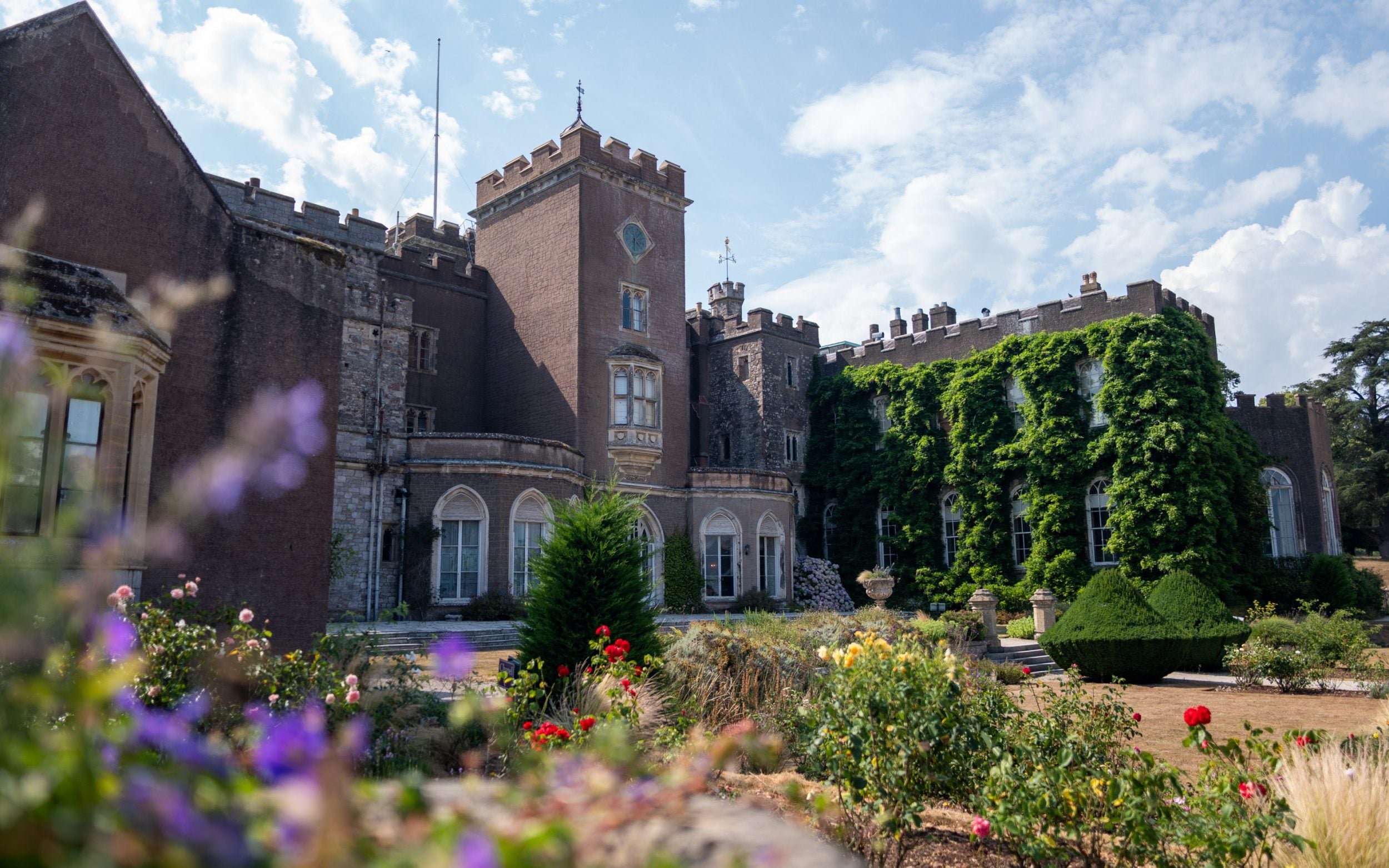
The Earl says the cost of insuring Powderham Castle has risen by 450 per cent since he inherited the estate in 2015 - Jim Wileman
You have to do what you can, the Earl says. During the pandemic, he made use of Historic England’s Covid-19 Heritage at Risk Response Fund to fix the tower roofs at a cost of around £300,000. “A six-inch piece of plaster recently broke off in the stair hall and fixing it could cost about half a million,” he says. “We’re always having to make decisions – do we invest or do we let that go? You could have a phenomenal amount of money and it still wouldn’t be enough.”
Rather than getting swallowed up by it, he regards Powderham and himself as separate entities. He works as a solicitor for Michelmores in Exeter to fund his own life and family, and the estate is supported by its farmland, country store, events and visitors – more than 40,000 each year. He has no shame in running the castle as an attraction. His grandparents opened it to the public in desperate times after the Second World War and his parents were early adopters of open-air concerts – Shirley Bassey performed there in the 1990s.
“I’ve always grown up with it earning its keep – I mean, what a privilege to be able to call home a place people want to walk around. Powderham wouldn’t be here if it wasn’t for the support of its audience,” he says. As we speak, a three-night comedy show is being set up in the parkland; last month, 120,000 music fans descended on Powderham for the Live at Powderham series, which featured Alanis Morissette.
Does he feel pressure to make his mark on the estate? The Earl and Countess of Sandwich at Mapperton in Dorset have their own YouTube channels, amassing droves of paid followers who never set foot on the estate, while the Longleat Estate has lions in the parkland and a television show. “God, I’m glad I don’t have a safari park around my house,” the Earl sighs. “One of the joys of Powderham is that at the end of the season, it feels like a private home again.”
His ambitions for Powderham are modest – he’d like to leave the estate in slightly better condition than when he found it, although this is more difficult than it sounds as time and tide wear the place down. His latest project is the Powderham Heritage Foundation, to conserve the archive and library, which were refurbished around 1740 with elaborate bookcases by cabinet-maker John Channon and contain one of the South West’s most important private collections of papers, rare books and manuscripts.
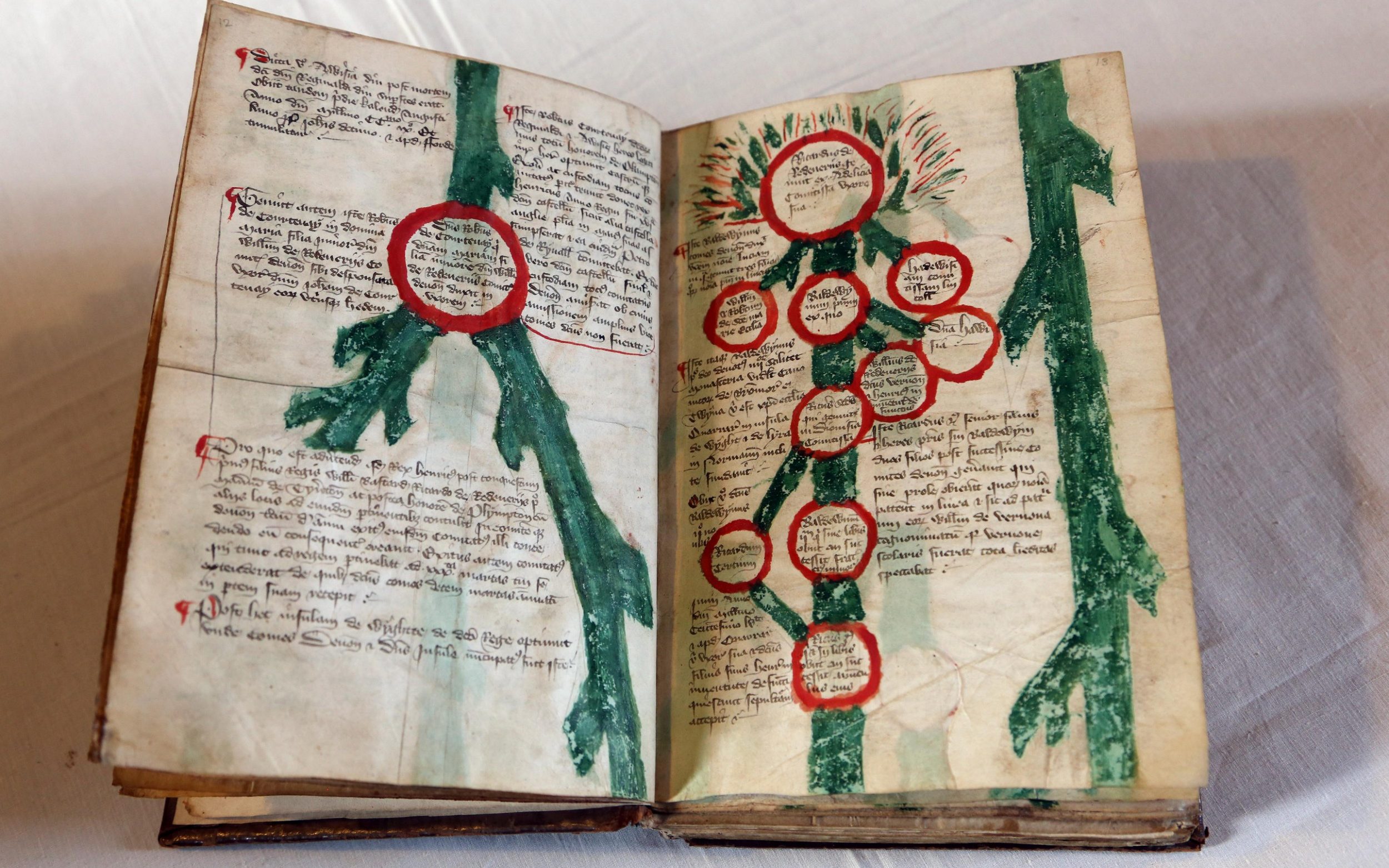
The Earl of Devon’s latest project is the Powderham Heritage Foundation, which is conserving important collections of papers, rare books and manuscripts dating back centuries - John Lawrence
It irked him at the beginning of his tenure when the castle was marked down for sustainability in a local tourism awards. “We’ve been running a sustainable small to medium-sized family business for 700 years,” he says. “Powderham might not be in perfect nick but at least it continues to function as a whole.” The last thing he wants to do is embark on a grand project that causes problems for the next generation, he adds.
As it stands, it will be his youngest, Jack, who will inherit the earldom, although the Earl has fought hard in the Lords to equalise the laws of succession to hereditary peerages, which would enable his first-born to inherit. “I’m the youngest of four very able children – I’m the Earl because I’m the only male,” he says, referring to his three older sisters. “That’s unfair in this day and age and inappropriate,” he continues. Were the law to be changed as he desires, it would be his eldest sister, Lady Rebecca Wharton, who would have inherited the titles.
“While the Labour Government promotes equal opportunities, they’re not allowing equal opportunities for peers. Everyone points at us saying, ‘You’re all white men’ – well that’s not our fault if the Government refuses to change the laws of succession for peerages as they did for the Crown. If, within a generation, half of those owning an estate or a manor were female, it would send a positive message. It would be the daughter and not the son who is the one commissioning the works and being the local business lead. The fact that we reserve this place within our society only for men is wrong.”
The objections to equalising succession – complications surrounding adopted children, or, as the Marquess of Bath has recently discovered, surrogate children – are not valid excuses, he continues. “The patriarchy throws up a lot of reasons not to be disestablished but it’s doable. The Royal family has done it – someone has just got to sit down and do the work.”
Despite not having a voice in Parliament, the Earl continues to promote the interests of the West Country on boards and committees.
With any luck, Andy Burnham will empower the regions, he says, pointing out that “Plymouth and Exeter are Labour-voting cities”.
“Historically the South West has done very well at times when we’ve had independence from London and had our ability to build relationships independently. We should be forging relationships directly with Europe.”
Burnham’s lack of democratic legitimacy worries him – the way he has come to power is not transparent and he’s anxious that the South West has been left with no mayoralty during local government reorganisation. “If we don’t have a voice, we will really fall behind,” he says.
Is he worried that the new Chancellor could be coming for Powderham? The Government has been threatening to increase the tax burden on wealthy property owners with changes to council tax and suggestions of a land value tax. The Earl refuses to lose sleep over measures that have yet to materialise. Besides, he believes reform is needed.
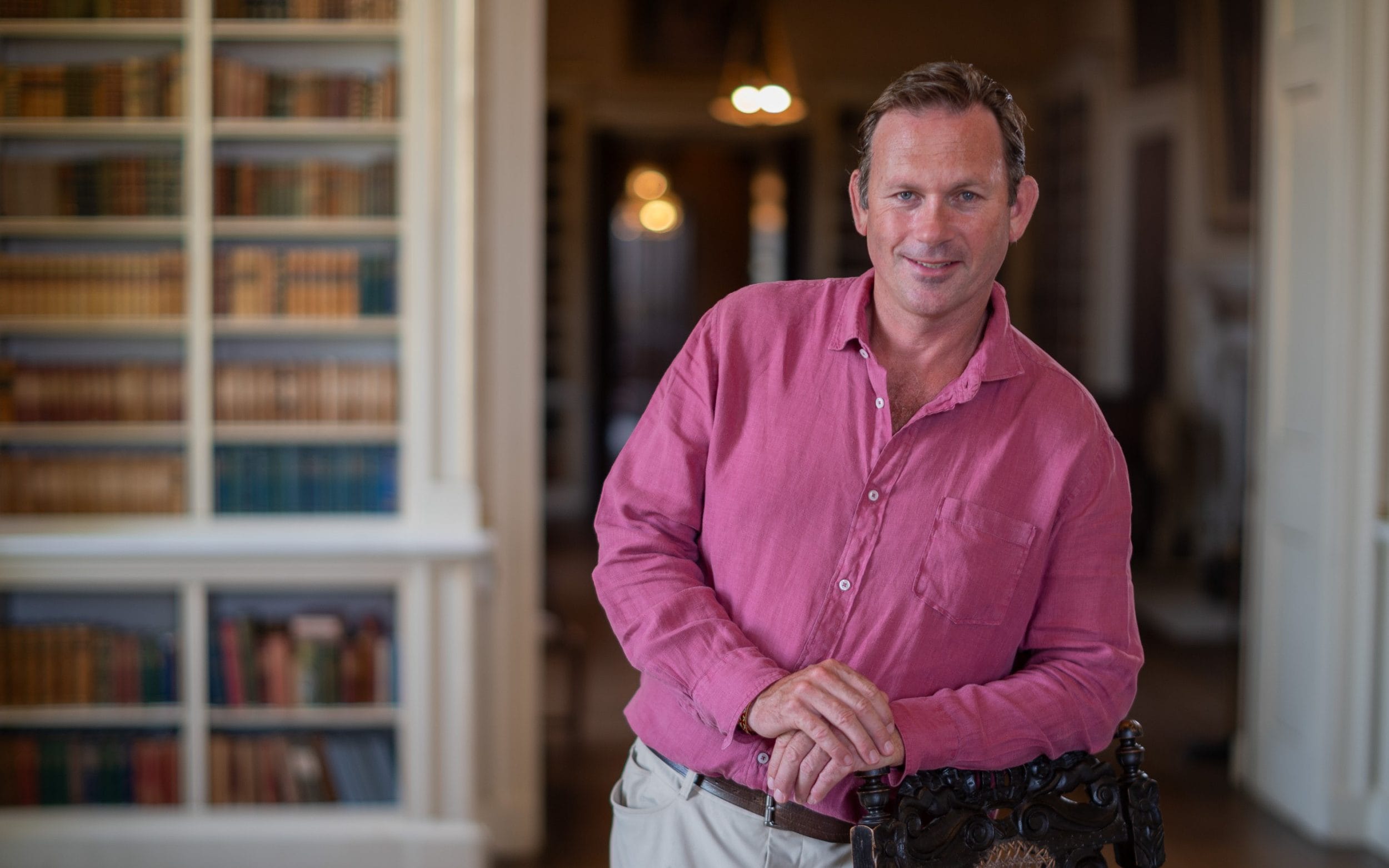
The Earl of Devon says hereditary peers brought regional knowledge and a long-term perspective to Parliament - Jim Wileman
“The way property is taxed in this country is not right,” he says. “There are plenty of very valuable houses owned by very wealthy people who don’t pay their fair share.” But he is yet to be convinced by any of the proposed alternatives. “I’m not sure a land value tax is the right way to go about it,” he says. “A lot of landowners, particularly hard-working farmers, don’t make much money off their land.”
There are around 78 members of staff working across the estate – an almost identical payroll to that of 1749 when adjusted for inflation. Many are from families who have worked at Powderham for generations – they speak fondly of “Charlie”, who isn’t too grand for any job. He’s growing into his position as Earl, venturing out of the family quarters to use the formal rooms of the castle more often.
“I’m beginning to get more confident around the space – it takes time to feel comfortable,” he says. Just in time for the new Countess to arrive. Earlier this year, the Earl became engaged to Jemima Hannon, granddaughter of the late life peer Baron Campbell of Alloway. It is happy news, he adds. The mother of two, who grew up on her family’s stud in Wiltshire, was previously married to racehorse trainer Richard Hannon Jr.
“I’m not sure I’m doing anything very different,” he says, “but I’m doing everything a bit differently.”
Source: “AOL Entertainment”
