


Do clocks fall back this weekend? When daylight saving time 2026 ends
Do clocks fall back this weekend? When daylight saving time 2026 ends

Maria Francis and Joe Martino, USA TODAY NETWORKTue, September 15, 2026 at 8:19 PM UTC
1
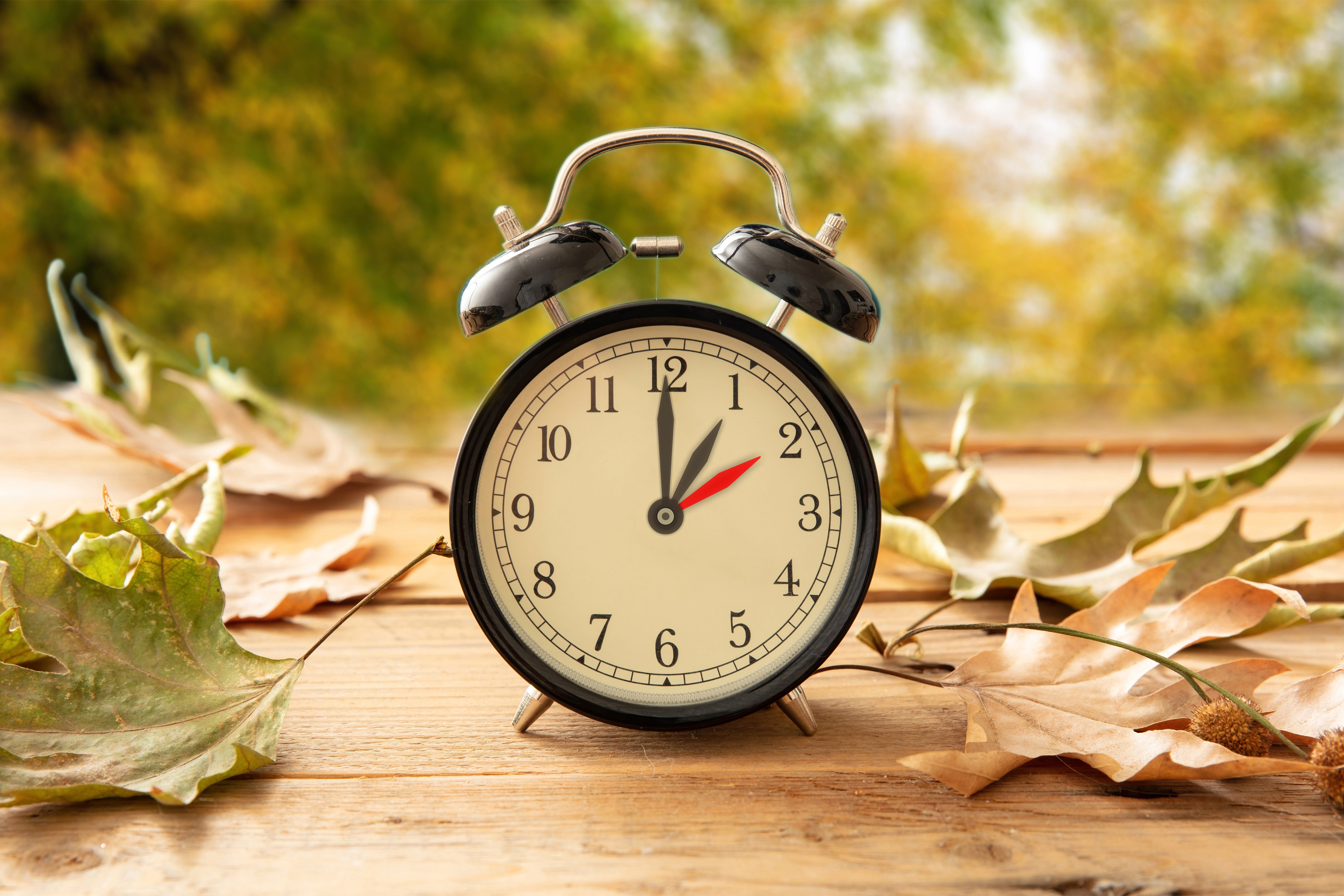
If the darker mornings have you wondering whether it is already time to turn back the clocks, you can hold off.
Daylight saving time does not end this weekend. New Jersey residents will move their clocks back one hour at 2 a.m. Sunday, Nov. 1, marking the return to Eastern Standard Time.
That means 2 a.m. will become 1 a.m., giving most people an extra hour of sleep. Sunrise and sunset also will arrive about an hour earlier after the change.
Most cellphones, computers and other internet-connected devices should change automatically. Wall clocks, watches, microwaves, ovens and some vehicle clocks may need to be reset manually.
More: Permanent daylight saving time is a bad deal for New Jersey | Opinion
When does daylight saving time end in 2026?
Daylight saving time ends on the first Sunday in the month of November at 2 a.m. local time. This year it falls on Sunday, Nov. 1, 2026.
At that time, clocks will be turned back one hour to 1 a.m., giving most Americans an extra hour of sleep.
Daylight saving time began on the second Sunday in the month of March at 2 a.m. local time. Next year it will fall on Sunday March 14, 2027.
Why do we change the clocks every year?
According to the Farmers' Almanac, the general idea behind daylight saving time is to provide more daylight during summer evenings and then shift daylight back to morning hours during the winter months.
The current system was established under federal law and has been used in various forms across the United States for decades. Still, the practice remains controversial, with ongoing debate over whether the country should remain on daylight saving time year-round or adopt permanent standard time instead.
Will we lose an hour or gain an hour when daylight saving time ends?
In the fall, clocks fall back one hour. You will gain an extra hour of potential sleep or play.
In the spring, clocks spring forward one hour. You will have lost an hour when you awake that morning.
Advertisement
Will daylight saving time become permanent?
The House passed the Sunshine Protection Act in July by a bipartisan 308-117 vote. The legislation would make daylight saving time permanent and eliminate the twice-yearly clock changes observed by most Americans.
The bill is now awaiting action in the Senate, where no vote has been scheduled. Senators are expected to return to regular legislative business Sept. 14, but supporters face a narrowing window before the Nov. 1 clock change.
Trump has urged lawmakers to act quickly, while Scott recently said, "Now is the time for Congress to pass my Sunshine Protection Act" and "LOCK THE CLOCK."
For now, however, the law has not changed, meaning Americans should expect another time change on Nov. 1.
When is the shortest day of 2026? Winter solstice 2026
The winter solstice arrives on Dec. 21, 2026. It is the shortest day of the year and the official start of astronomical winter. For residents across Pennsylvania, New Jersey and Delaware, daylight will be limited to roughly nine hours depending on location.
After the winter solstice, daylight gradually begins increasing again as the Northern Hemisphere starts its return toward spring.
To check how many hours of sunlight you'll get and the sunrise/sunset times in your area, click here.
What states observe daylight saving time?
Pennsylvania, New Jersey and Delaware are among the majority of states that observe daylight saving time. However, Hawaii and most of Arizona do not participate in the clock changes.
Several U.S. territories, including Puerto Rico, Guam, the U.S. Virgin Islands, American Samoa and the Northern Mariana Islands, also do not observe daylight saving time.
If Congress changes the law before Nov. 1, most Americans will once again turn their clocks back one hour and officially say goodbye to daylight saving time for the winter months. Albeit, under the new legislation, states will be given the option to opt out.
Maria Francis is a Pennsylvania-based journalist covering trending and breaking topics across the Mid-Atlantic and Northeast regions for USA Today Network. Reach her at mfrancis@usatodayco.com.
This story was produced by editor Joe Martino, jmartino@usatodayco.com, with the assistance of Artificial Intelligence (AI). Journalists were involved in every step of the review, editing and publishing process. Learn more at cm.usatoday.com/ethical-conduct.
This article originally appeared on MyCentralJersey.com: Do clocks fall back this weekend? When daylight saving time 2026 ends
Source: “AOL Breaking”
