


Atlantic’s First Hurricane May Form Near Bermuda As Forecasters Slash Season Outlook
Atlantic’s First Hurricane May Form Near Bermuda As Forecasters Slash Season Outlook

Matt Rife Tue, September 15, 2026 at 5:03 PM UTC
1
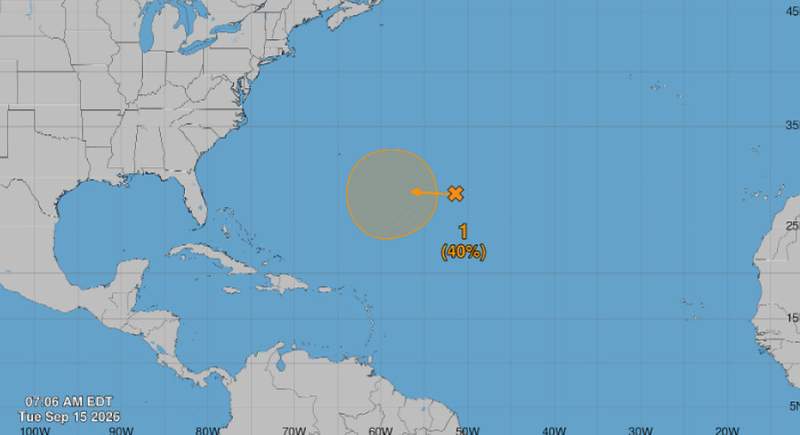
Atlantic - Caribbean Sea - Gulf of America
A cluster of showers and thunderstorms near Bermuda could turn into the Atlantic’s first hurricane of the year, even as forecasters reduce their overall storm projections for 2026.
Meteorologists give the disorganized system a medium risk of tropical development between Sept. 17 and Sept. 21. Residents and officials on the island are being advised to track the weather closely over the next several days.
“If this system develops, it will likely move into an environment that is conducive for strengthening,” said AccuWeather expert meteorologist Nicholas Arman. “We cannot rule out this becoming the first hurricane of the Atlantic season should it develop. The combination of warm ocean water and favorable atmospheric conditions near Bermuda could allow the system to strengthen significantly if it becomes organized.”
The potential system comes during an unusually quiet stretch for the Atlantic. AccuWeather has lowered its 2026 forecast to just 1 to 3 hurricanes, down from its earlier estimate of 3 to 4. Five named storms have formed so far this year, but none have reached hurricane status. Historically, the first Atlantic hurricane appears by Aug. 11.
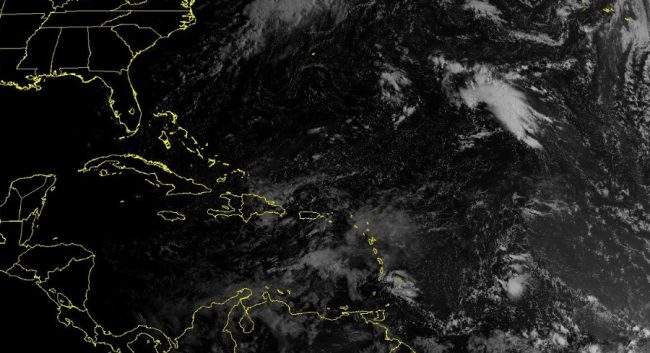
National Hurricane Center
“We have never gone this late into the Atlantic hurricane season without a hurricane in the satellite era,” said AccuWeather lead hurricane expert Alex DaSilva. “The strengthening El Niño is a major reason we are lowering our forecast again. Increasing wind shear has made it extremely difficult for storms to organize and strengthen, and we expect those conditions to become even less favorable as El Niño strengthens.”
Strong El Niño conditions in the Pacific are expected to become a “super El Niño” by the end of the season. This pattern creates high wind shear across the Atlantic basin, tearing storms apart before they can fully form.
“The Atlantic has plenty of warm water to support tropical development, but El Niño is working against it,” DaSilva noted. “If we were in a La Niña pattern with these same warm ocean temperatures, we would likely be forecasting an above-average season. Instead, stronger wind shear associated with El Niño is making it much harder for storms to organize and strengthen.”
Advertisement
Past records show that strong El Niño events often suppress Atlantic storms late in the year. In both 1982 and 1997—two of the three super El Niño years since satellite tracking began in 1966—no new Atlantic hurricanes formed after Sept. 14.
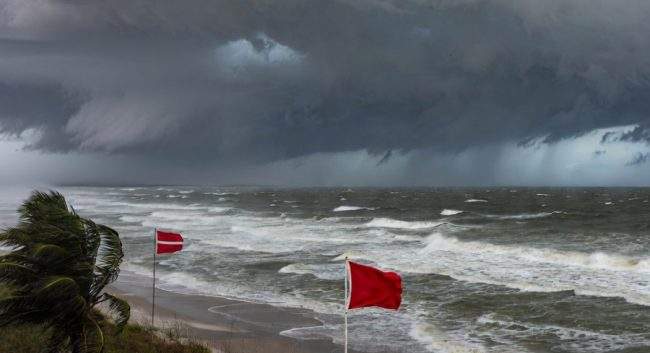
Rip Current, Red Flag (File)
Even with lower seasonal totals, forecasters warn that coastal risks remain real along the Southeast and Gulf coasts. Warm coastal waters can allow weak or disorganized systems to intensify rapidly right before making landfall.
“It continues to be important to closely monitor each tropical wave for the rest of this season,” DaSilva said. “Some tropical waves may remain disorganized while crossing the Atlantic, only to develop and intensify once they reach the exceptionally warm waters near the U.S., such as off the Southeast coast and Gulf of America. Warm waters close to the coast mean a storm that finds a favorable window could strengthen quickly and leave communities less time to prepare.”
The Atlantic hurricane season runs through Nov. 30.
READ: Veteran Immigration Attorney Unveils New Blueprint To Overhaul U.S. Immigration System
Please make a small donation to the Tampa Free Press to help sustain independent journalism. Your contribution enables us to continue delivering high-quality, local, and national news coverage.
Sign up: Subscribe to our free newsletter for a curated selection of top stories delivered straight to your inbox.
Atlantic’s First Hurricane May Form Near Bermuda As Forecasters Slash Season Outlook
Source: “AOL Breaking”
